





A real statement
The dark pleats give the window rhythm and character.
Black pleated blinds make the window a distinct part of the interior. Sleek, calm and striking — especially with black window frames, dark kitchens and industrial materials.
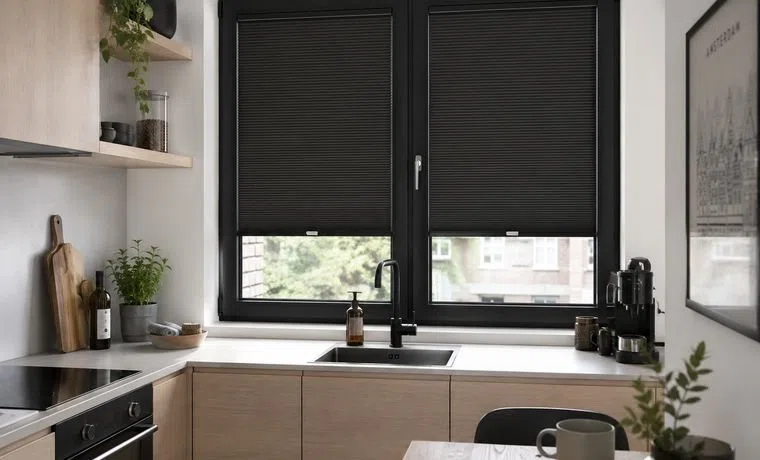
Black works most powerfully when it is a deliberate part of the lines in the interior, not a separate dark surface.
The dark pleats give the window rhythm and character.
With black window frames, fabric, profile and window merge into one surface.
Against white walls or a light floor, black looks crisp and well-groomed.
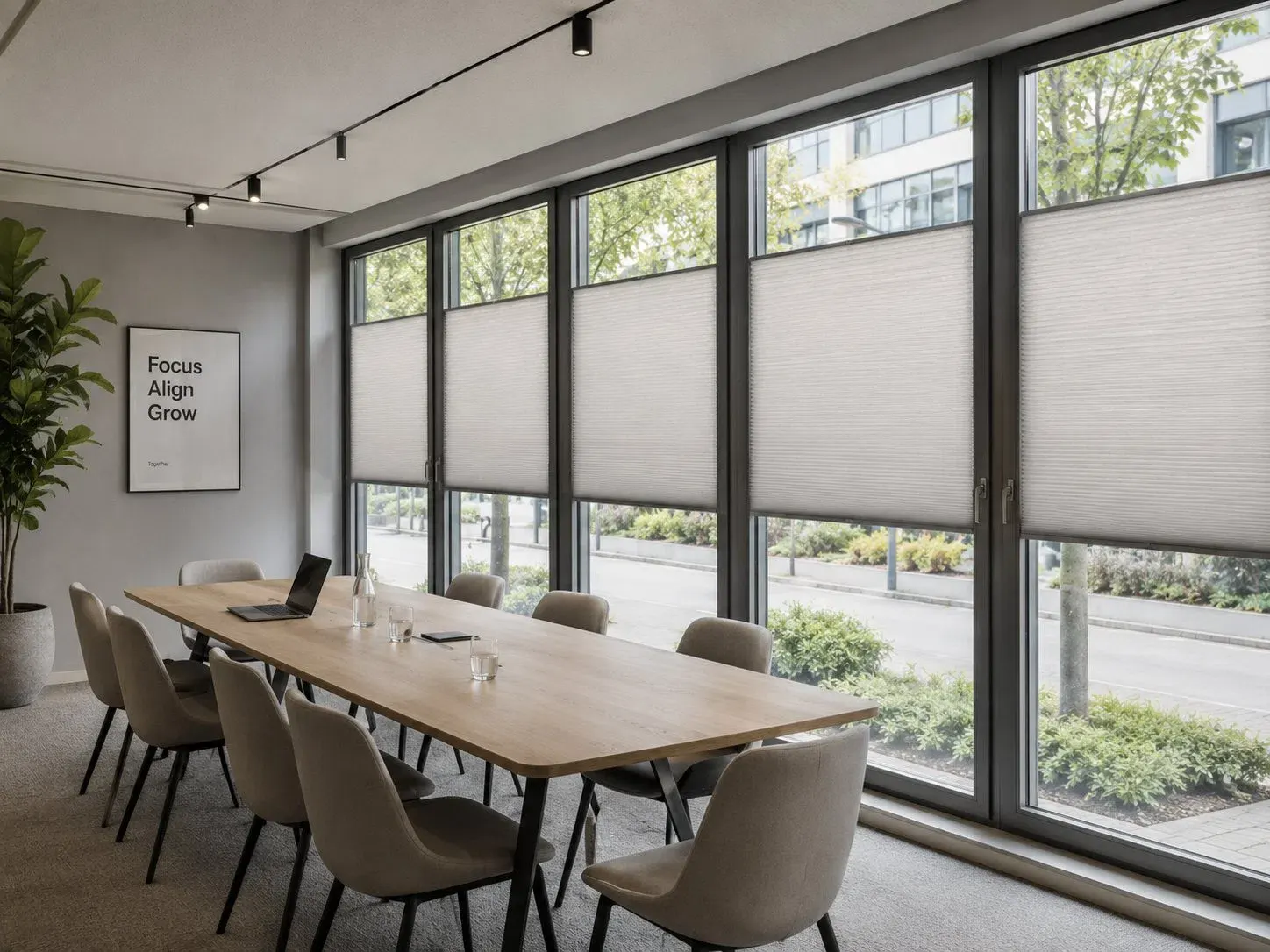
Repeat black in window frames, lamps, furniture legs or steelwork and keep the other materials calmer. That gives the pleated blind a clear but controlled place.
White, lime, light grey or a light floor.
Window frames, pleated blind and a few pieces of furniture or lamps.
Oak, leather, brass or a warm colour prevents coldness.
Light-filtering, coloured or blackout: choose the atmosphere first and then how much light you want to control.
Black inside and white outside. The best choice when the façade needs to stay light and uniform.
Black inside and outside for a strong match with dark window frames and façade details.
Black Black-out is ideal for maximum calm, insulation and darkening in a bedroom or media corner.
RAL 9005 lets a black window frame and the Stick & Fit system form a single whole. On white window frames, a white adhesive profile can be more subtle, with only a black operating rail to go with the fabric.
Completely black and graphic.
Slightly softer with anthracite window frames.
For a black pleated blind on a white window without dark side lines.
RAL 9005 is the logical choice with black window frames; RAL 7016 gives a slightly softer dark contrast. The operating rail can follow the same dark line or match the fabric instead.
Black provides maximum contrast and a very clear interplay of lines. These examples show how powerful that can be.
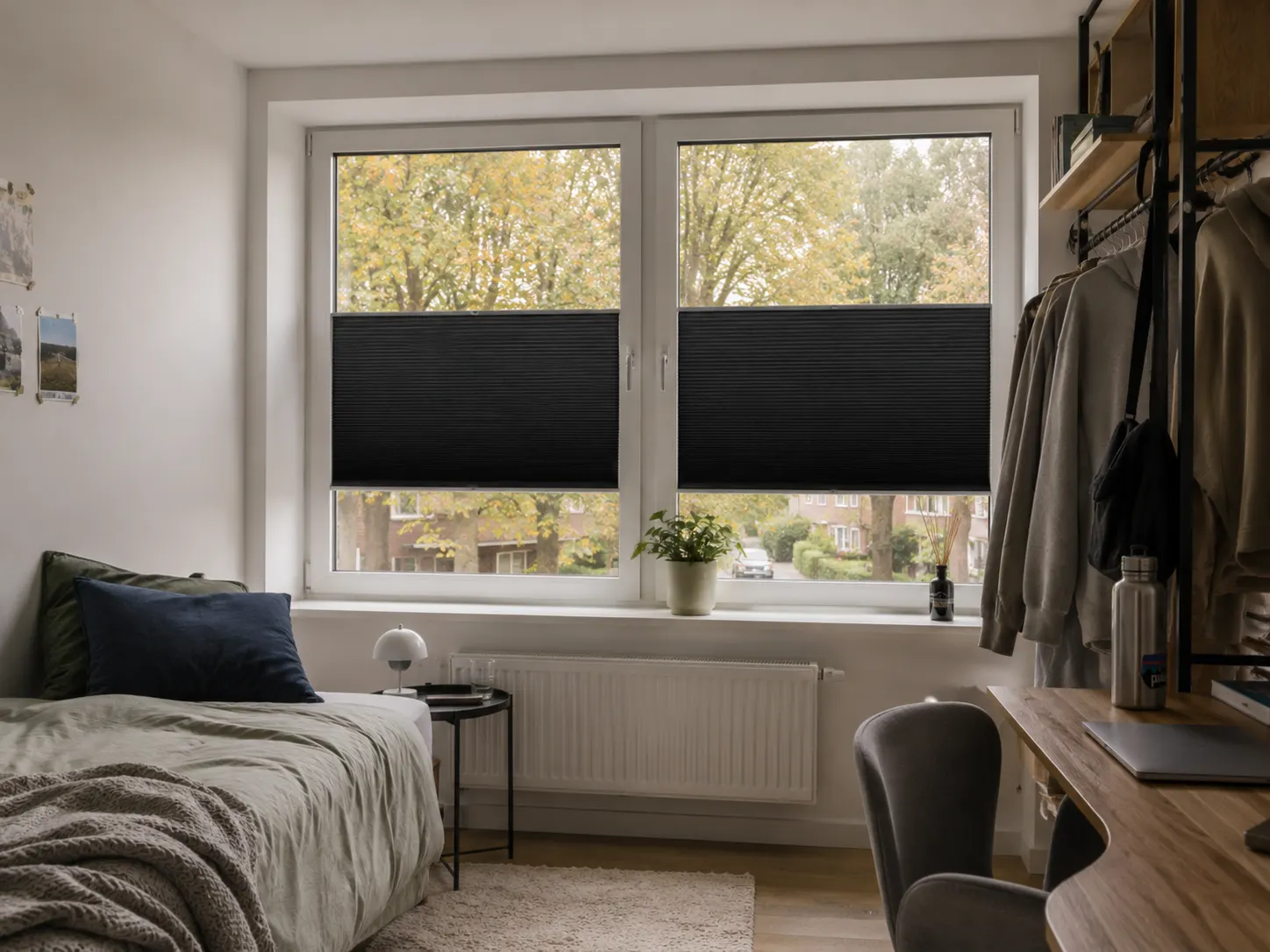
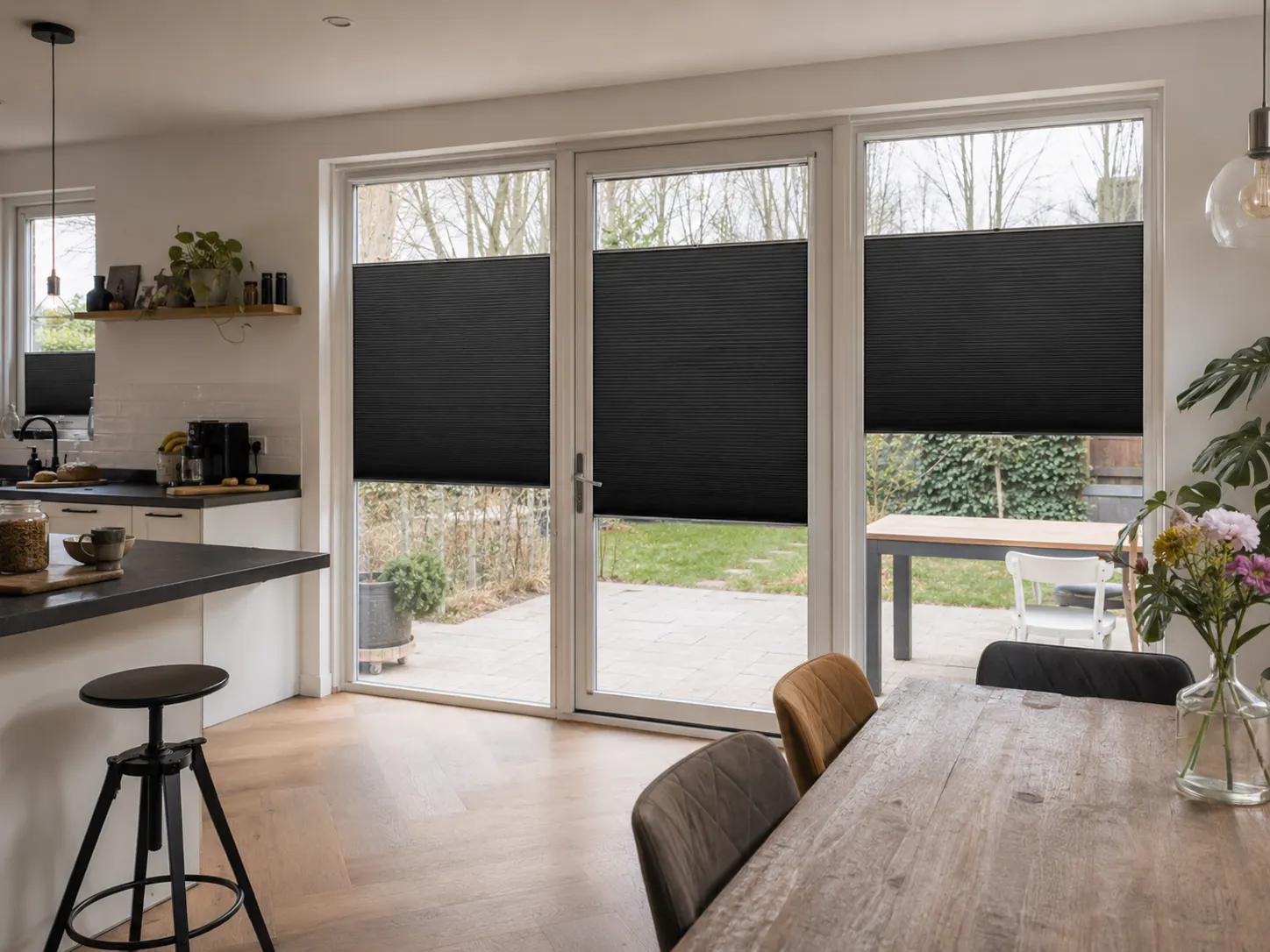
Use the colour as a calm base, a warm connecting element or as a bright accent.
Black with steel, brick, concrete and weathered wood.
Few materials, sharp lines and lots of empty space.
Black with rich fabric, warm lighting and brass.
A black accent against lime white, oak and natural textures.
A black sample often looks lighter in bright daylight than in the evening. So compare it at the actual window and next to the surrounding materials.
Leave part of the window open to keep light and the view.
Choose Duo Tone if you don't want black on the outside.
Some black fabrics are warmer, others cooler or more graphite.
Dust shows more quickly on black, but it is easy to remove with a soft brush.
Place the samples by the window frame and look at them during the day, in the evening and from outside.
The colour alone does not determine that. Choose a Black-out fabric for strong darkening.
A dark outer side absorbs more heat. Duo Tone has a white outer side and is therefore often a comfortable choice.
RAL 9005 for black on black. With white window frames, RAL 9003 can be more subtle.
Yes, as an accent. Keep the rest light and use top-down/bottom-up to leave enough glass open.
Certainly. A few black lines actually give a natural interior more tension.
Yes. Look at black and anthracite side by side, because the difference is often clearer at home than on a screen.
Request black and anthracite as samples and see which dark shade blends in best with your window frame and interior.
No damage to your window frame
A perfect fit for every window
Improved insulation and blackout
Privacy, blackout and insulation
In the Netherlands, Belgium, Germany and France