





Makes the window calm
The fabric draws little attention and lets furniture, art and the view take centre stage.
Light, calm and timeless. White pleated blinds let the window blend into the interior and provide privacy without making the room feel heavy.
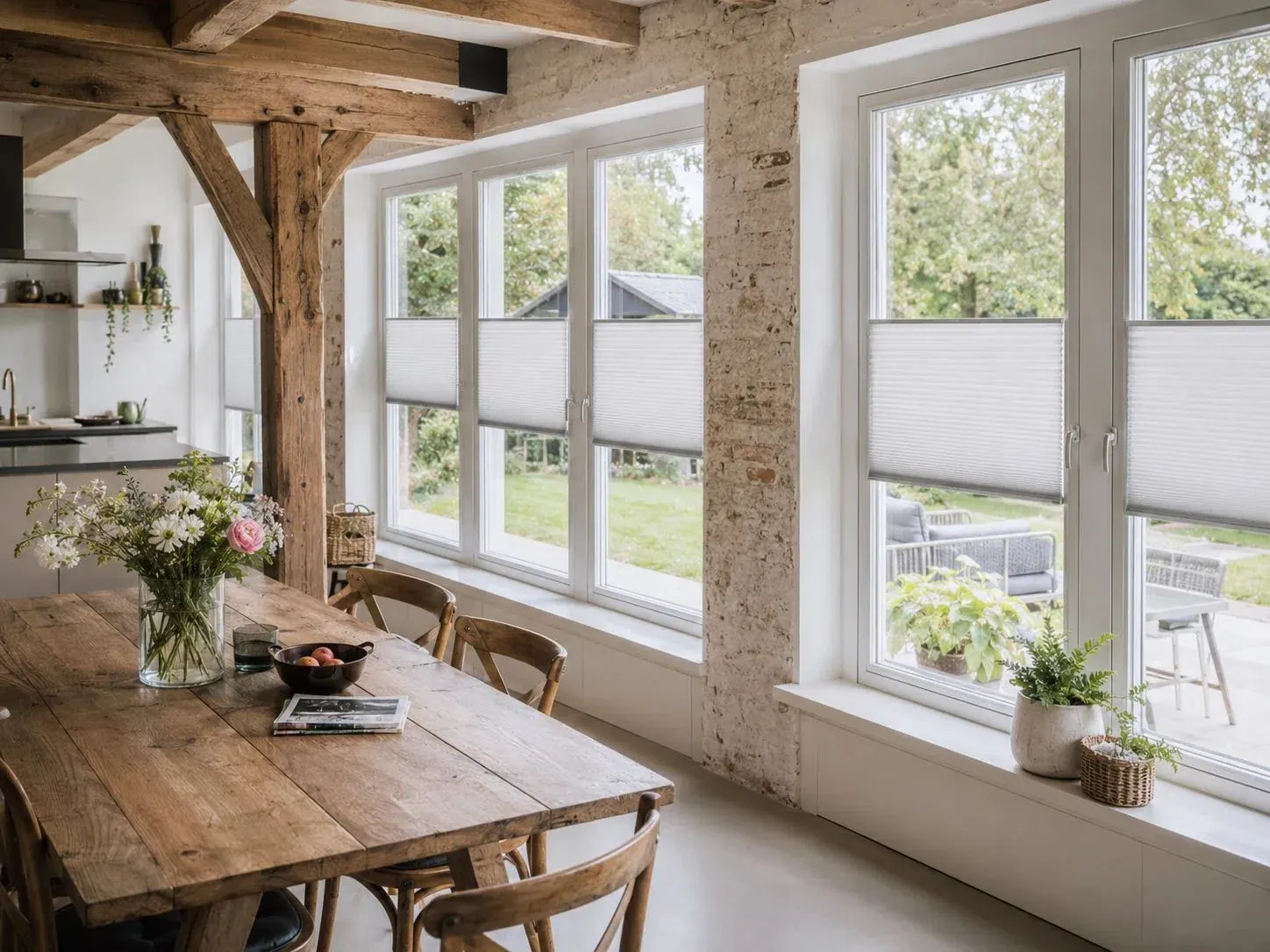
White can look bright, soft or warm; the difference lies mainly in the undertone and the light in the room.
The fabric draws little attention and lets furniture, art and the view take centre stage.
A white base still looks good when you later choose a different sofa, floor or wall colour.
With top-down/bottom-up you screen off only the part where people can look in.
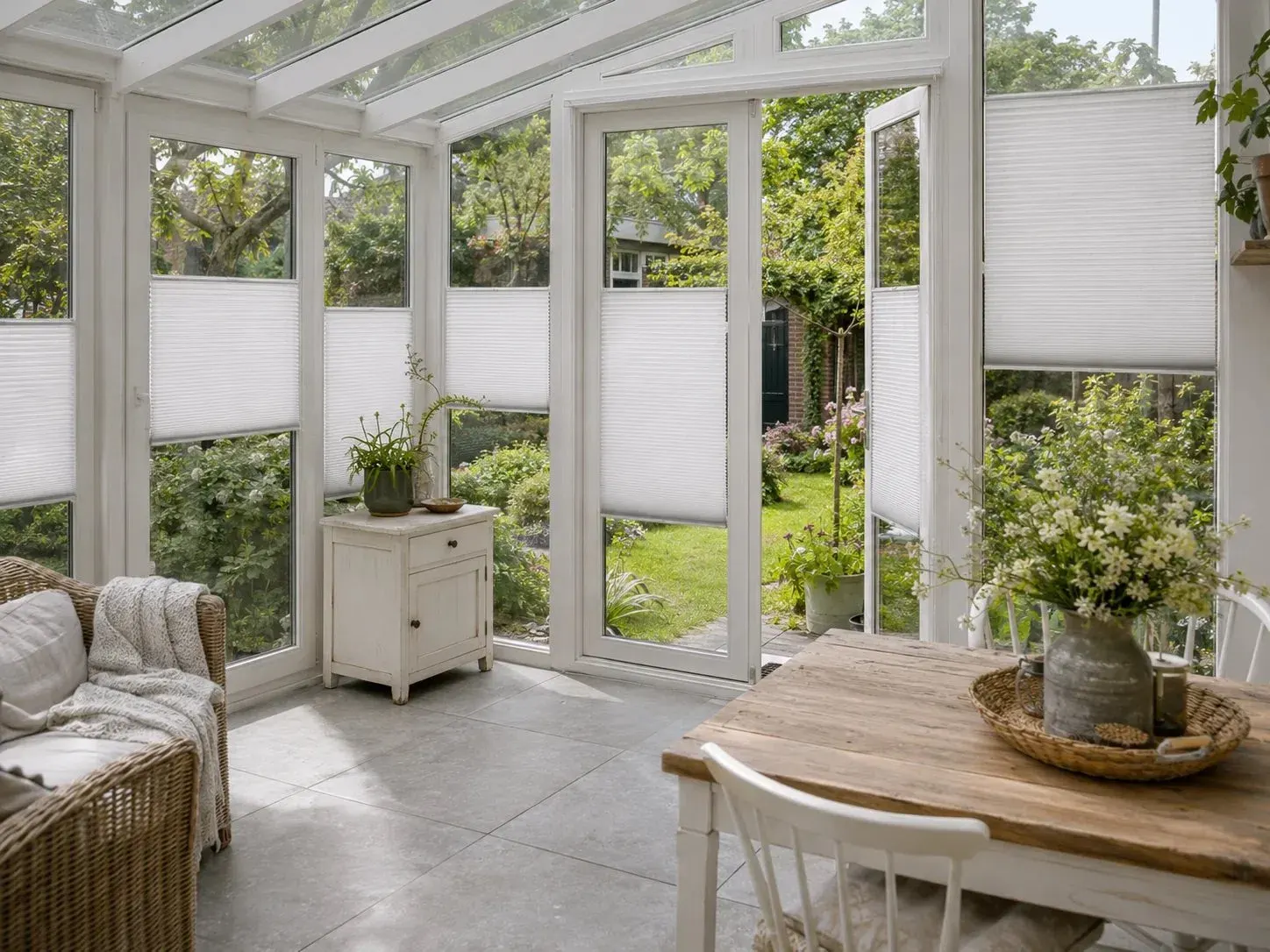
Compare a fresh white with a softer off-white next to the ceiling, wall and window frame. That way you avoid the fabric unintentionally looking bluer or yellower than the rest of the interior.
White or off-white walls and a calm floor.
Wood, wool, linen and woven accessories bring warmth.
Green, terracotta or black keeps the whole from looking flat.
Light-filtering, coloured or blackout: choose the atmosphere first and then how much light you want to control.
The white outer side gives the façade one calm appearance. Inside, you choose the colour that suits the room.
A white Single Tone stays light and shows off the fine 25 mm pleats beautifully.
Choose a light Black-out fabric if you want to darken a bedroom calmly without a dark colour at the window.
With white window frames, RAL 9003 is usually the calmest choice. With cream window frames, RAL 9001 often matches better. The operating rail may differ slightly if you want it to match the fabric.
Bright and fresh with modern white window frames.
Softer with cream, chalk paint and warm shades of white.
A subtle grey line with concrete, natural stone or cool floors.
With white window frames, an adhesive profile in RAL 9003 usually all but disappears. RAL 9001 creates a warmer whole; the operating rail can match the fabric if you prefer.
White pleated blinds keep the window light and calm. In these extra mood images you can see how that works in both a classic living room and a bright kitchen.
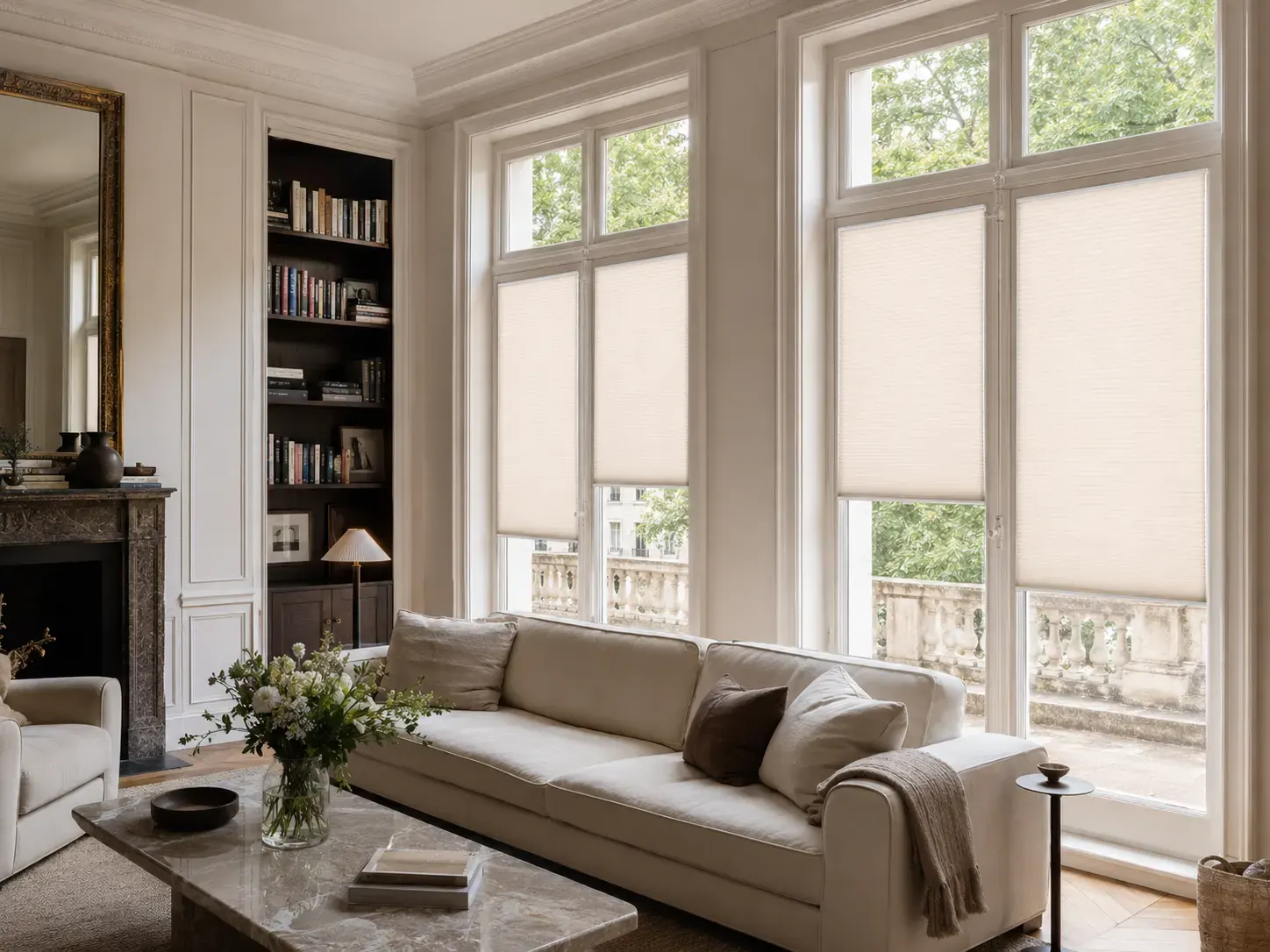
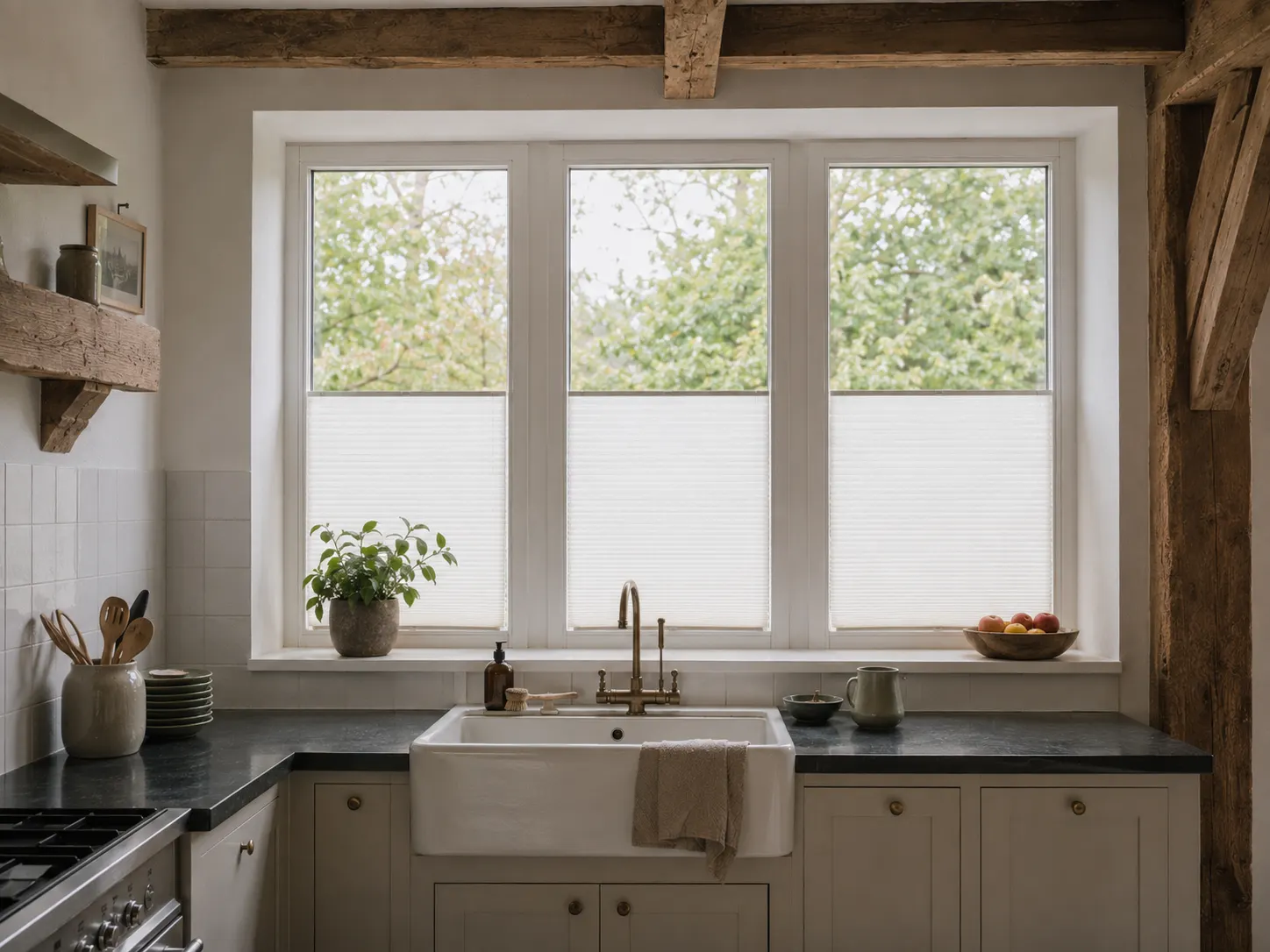
Use the colour as a calm base, a warm connecting element or as a bright accent.
Combine white with pale wood, soft wool and a few black details.
Work with different shades of white, a rich rug and soft lighting.
A white pleated blind with old beams and natural wood adds airiness without becoming cold.
Let white contrast with black window frames or a dark kitchen.
Look at a white sample both during the day and in the evening. Daylight, artificial light and green reflections from the garden can visibly change the colour.
A fabric can look cooler in sunlight and warmer under artificial light.
Place bright white, cream and light grey side by side at the window.
Dust with a soft brush or cloth; treat a stain carefully with a slightly damp cloth.
From 230–1800 mm wide and 200–3000 mm high, with the maximum height depending on the width.
Place the samples by the window frame and look at them during the day, in the evening and from outside.
Dirt can show on a light fabric, but gently dusting it regularly is usually enough. You can treat small stains with a slightly damp cloth.
Yes. In that case choose a white or light Black-out fabric for strong darkening and extra insulation.
Usually RAL 9003. With a warm white or cream window frame, RAL 9001 can blend in more calmly.
Yes. Both parts can be chosen separately from RAL 9003, 9001, 7035, 7016 and 9005.
With Duo Tone, the outer side of every fabric colour is white. With several rooms, that gives a unified whole.
Yes. Request free fabric samples and look at them by the window at different times of day.
Request a few light fabric samples and compare them at home with the window frame, the wall and the daylight.
No damage to your window frame
A perfect fit for every window
Improved insulation and blackout
Privacy, blackout and insulation
In the Netherlands, Belgium, Germany and France